What is Multiple Hereditary Exostoses (MHE) / Multiple Osteochondroma (MO)? it is a debilitating disorder
characterized by benign bone tumors, skeletal malformations and an assortment of variable non-skeletal symptoms that persist
throughout life. One of the topics that will be addressed during the next conference will be the use of the terms used to
describe MHE / MO / HME.
Multiple Hereditary Exostoses / Multiple Osteochondroma can be debilitating when the exostoses compress soft tissues, such
as surrounding muscles, nerves and blood vessels. In addition, some MHE / MO / HME patients develop malignant
chondrosarcoma.
The only known treatments for MHE / MO / HME are surgical removal of the exostoses, (which often grow back at the original
site) and surgical procedures to correct bone deformities and limb length discrepancies. Surgery, physical therapy and pain
management are currently the only options available to MHE / MO / HME patients, and their success varies from patient to
patient and many struggle with pain, fatigue and mobility problems throughout their lives.
The objectives of this conference, are to again establish and bring together the research and clinical communities devoted to
the better understanding of MHE / MO / HME and those caring for Hereditary Multiple Exostoses patients. In the hope that the
research and education being done today will bring a better quality of life to all who are affected by this condition. This will be
accomplished by bringing together basic researchers from various disciplines, orthopaedic physicians, medical geneticists, MHE /
MO / HME advocacy leaders and families.
The meeting facilitates discussions and collaborations both among and between all groups, accelerating the integration of
current knowledge and identifying new areas with future research potential. The conference plan and the selected meeting site
were both designed to encourage dissemination and discussions of new ideas and the establishment of new collaborations
between laboratories.
Understanding of MHE / MO / HME is just at the point where we can begin to make major inroads toward better diagnosis,
treatment, and possible cure. While the last few years have brought real gains in our understanding, many issues remain
unanswered. What signaling pathway is compromised at the growth plate when heparan sulfate synthesis is reduced? Why
does complete loss of EXT1 or EXT2 function produce overt malignancy? Are there ways to restore heparan sulfate levels to
normal values and repress the growth of the benign tumors? Might the malignant disease be ameliorated by restoring heparan
sulfate synthesis in transformed cells? What can this disease tell us about the fundamental mechanisms of bone growth and
remodeling?
Timing of this conference to the scientific and medical communities
There are no other meetings that focus on the EXT genes, MHE / MO / HME and so this meeting has a critical role as a forum
for dialogue and exchange and will help shape future research in this area. Our goal in planning this meeting is to bring
together researchers with active interests in the functions of the EXT proteins and to highlight and integrate recent progress in
the rapidly growing area. This special focused meeting distinguishes this conference from all other meetings in the areas of
heparan sulfate, signaling and the extracellular matrix human genetics and Orthopaedics. Holding a substantial, focused
meeting creates new opportunities for cross-fertilization and collaboration, to ensure the highest research quality takes place,
encourages future research and determines the most appropriate goals for translational studies. This is important for all who
are active in this research area. This meeting will be very useful to clinicians in enhancing communication between basic
researchers and clinicians and improving patient care and quality of live for MHE / MO / HME patients.
Relevant Previous Meetings
October 2002, the first conference on Hereditary Multiple Exostoses was organized by Dr. Jeffrey Esko and Dr. Scott
Selleck, Ms. Ziegler and was held at the Arizona Cancer Center in Tucson, Arizona. The first MHE Conference, idea came about
from Sarah Ziegler’s initiative, conversations with many researchers concerning a desire to meet with other researchers from
many different disciplines as well as clinicians, to gather together to share ideas and information.
2nd International MHE Conference was organized by Dr. Dan Wells, Dr. Jacqueline Hecht and Sarah Ziegler in 2005
3rd International MHE Research Conference was organized by Dr. Yu Yanaguchi and Sarah Ziegler in 2009
4th International MHE Research Conference was organized by Maurizio Pacifici, Ph.D. and Sarah Ziegler in 2012
characterized by benign bone tumors, skeletal malformations and an assortment of variable non-skeletal symptoms that persist
throughout life. One of the topics that will be addressed during the next conference will be the use of the terms used to
describe MHE / MO / HME.
Multiple Hereditary Exostoses / Multiple Osteochondroma can be debilitating when the exostoses compress soft tissues, such
as surrounding muscles, nerves and blood vessels. In addition, some MHE / MO / HME patients develop malignant
chondrosarcoma.
The only known treatments for MHE / MO / HME are surgical removal of the exostoses, (which often grow back at the original
site) and surgical procedures to correct bone deformities and limb length discrepancies. Surgery, physical therapy and pain
management are currently the only options available to MHE / MO / HME patients, and their success varies from patient to
patient and many struggle with pain, fatigue and mobility problems throughout their lives.
The objectives of this conference, are to again establish and bring together the research and clinical communities devoted to
the better understanding of MHE / MO / HME and those caring for Hereditary Multiple Exostoses patients. In the hope that the
research and education being done today will bring a better quality of life to all who are affected by this condition. This will be
accomplished by bringing together basic researchers from various disciplines, orthopaedic physicians, medical geneticists, MHE /
MO / HME advocacy leaders and families.
The meeting facilitates discussions and collaborations both among and between all groups, accelerating the integration of
current knowledge and identifying new areas with future research potential. The conference plan and the selected meeting site
were both designed to encourage dissemination and discussions of new ideas and the establishment of new collaborations
between laboratories.
Understanding of MHE / MO / HME is just at the point where we can begin to make major inroads toward better diagnosis,
treatment, and possible cure. While the last few years have brought real gains in our understanding, many issues remain
unanswered. What signaling pathway is compromised at the growth plate when heparan sulfate synthesis is reduced? Why
does complete loss of EXT1 or EXT2 function produce overt malignancy? Are there ways to restore heparan sulfate levels to
normal values and repress the growth of the benign tumors? Might the malignant disease be ameliorated by restoring heparan
sulfate synthesis in transformed cells? What can this disease tell us about the fundamental mechanisms of bone growth and
remodeling?
Timing of this conference to the scientific and medical communities
There are no other meetings that focus on the EXT genes, MHE / MO / HME and so this meeting has a critical role as a forum
for dialogue and exchange and will help shape future research in this area. Our goal in planning this meeting is to bring
together researchers with active interests in the functions of the EXT proteins and to highlight and integrate recent progress in
the rapidly growing area. This special focused meeting distinguishes this conference from all other meetings in the areas of
heparan sulfate, signaling and the extracellular matrix human genetics and Orthopaedics. Holding a substantial, focused
meeting creates new opportunities for cross-fertilization and collaboration, to ensure the highest research quality takes place,
encourages future research and determines the most appropriate goals for translational studies. This is important for all who
are active in this research area. This meeting will be very useful to clinicians in enhancing communication between basic
researchers and clinicians and improving patient care and quality of live for MHE / MO / HME patients.
Relevant Previous Meetings
October 2002, the first conference on Hereditary Multiple Exostoses was organized by Dr. Jeffrey Esko and Dr. Scott
Selleck, Ms. Ziegler and was held at the Arizona Cancer Center in Tucson, Arizona. The first MHE Conference, idea came about
from Sarah Ziegler’s initiative, conversations with many researchers concerning a desire to meet with other researchers from
many different disciplines as well as clinicians, to gather together to share ideas and information.
2nd International MHE Conference was organized by Dr. Dan Wells, Dr. Jacqueline Hecht and Sarah Ziegler in 2005
3rd International MHE Research Conference was organized by Dr. Yu Yanaguchi and Sarah Ziegler in 2009
4th International MHE Research Conference was organized by Maurizio Pacifici, Ph.D. and Sarah Ziegler in 2012


| |||||||||||||||||||||||||||||||||||||||||||||||||||||||||||||||||||||||||||||||||||||||||


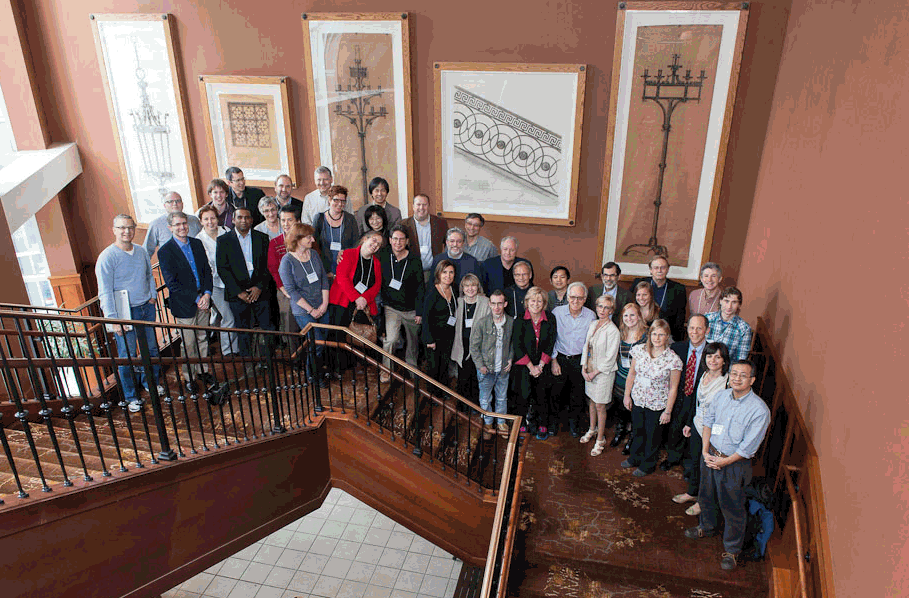
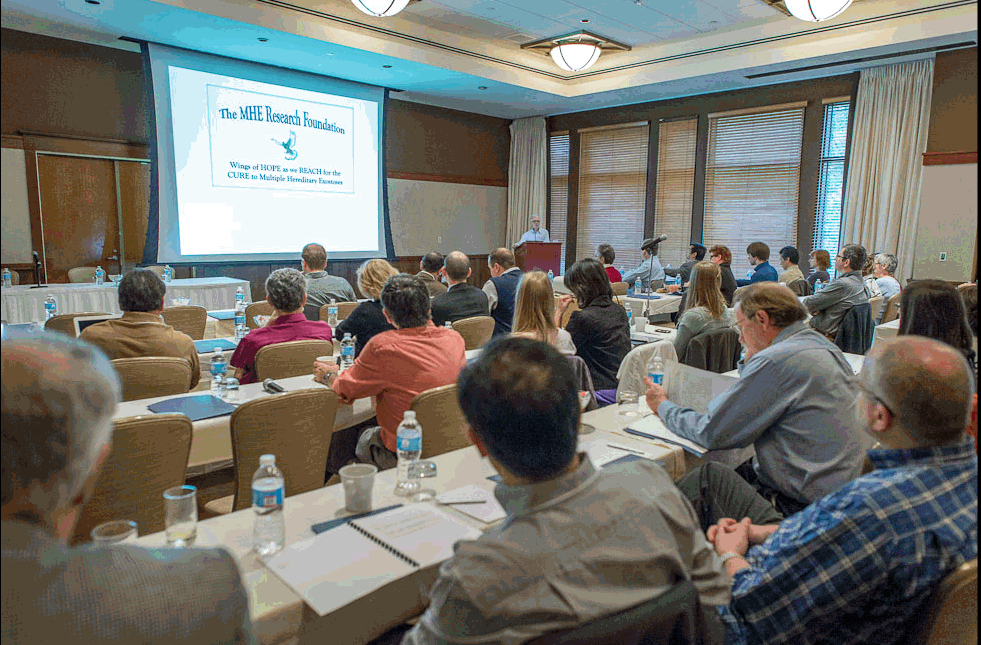
| Fifth International MHE Research Conference Was held in West Palm Beach at the Hanley Center located at St. Mary's Medical Center and the Paley Institute 933 45th St, West Palm Beach, FL 33407 Conference organized by Jeffrey D. Esko, Ph.D. Distinguished Professor, Department of Cellular and Molecular Medicine Co-Director, Glycobiology Research and Training Center School of Medicine, University of California, San Diego Dror Paley, MD, FRCSC Director of the Paley Institute and President Elect of the International Limb Lengthening and Reconstruction Society Sarah Ziegler Vice President and National Director of Research MHE Research Foundation |

Written consent must be obtained to attach web pages or the files attached to this website, please email the webmaster. Email the webmaster: webmaster@mheresearchfoundation.org Materials on this website are protected by copyright Copyright © 2016 The MHE Research Foundation Disclaimer: While many find the information useful, it is in no way a substitute for professional medical care. The information provided here is for educational and informational purposes only. This website does not engage in the practice of medicine. In all cases we recommend that you consult your own physician regarding any course of treatment or medicine. This web page was updated last on 5/11/16, 12:0O pm Eastern time |
The MHE Research Foundation, we comply with the HONcode standard for health trust worthy information: By the Health On the Net Foundation.
Click here to verify.# HON Conduct 282463 and is the patient support link on the US Government Genetics Home Reference (http://ghr.nlm.nih.gov)
website, also linked for Patient Information on The Diseases Database a cross-referenced index of human disease, as well as the
Intute: health & life sciences a free online service providing access to the very best Web resources for education and research located in the UK
Click here to verify.# HON Conduct 282463 and is the patient support link on the US Government Genetics Home Reference (http://ghr.nlm.nih.gov)
website, also linked for Patient Information on The Diseases Database a cross-referenced index of human disease, as well as the
Intute: health & life sciences a free online service providing access to the very best Web resources for education and research located in the UK
| This website is regularly reviewed by members of the Scientific and Medical Advisory Board of the MHE Research Foundation. All online submission forms use (SSL AES 256 bit encryption (High); RSA 1024 bit exchange) Protocol with Privacy protection. Our goal is to make this website as safe and user friendly as possible. |


| The MHE Research Foundation is a participating member organization of the United States Bone and Joint Decade/Initiative, (USBJD/I) & the USBJD/I Rare Bone Disease Patient Network |


The MHE Research Foundation is proud to be an affiliate of the Society For Glycobiology







| Wings of HOPE as we REACH for the CURE to Multiple Hereditary Exostoses Syndrome / Multiple Osteochondroma Syndrome |


This conference is sponsored by
The video presentations from the conference will be put online as soon as possible.
Overview of the MHE Conference: Jeff Esko. PhD
Clinical Presentations: Dr. Paley’s, Dr. Feldman, Dr. Weisstien, Dr. Robbins and Dr. Conrad
The planning of the 2019 6th International MHE Research Conference has started.
It takes your donations to make things like this happen. Please give so we can continue to REACH for the CURE.
MHE conference program schedule
Overview of the MHE Conference: Jeff Esko. PhD
Clinical Presentations: Dr. Paley’s, Dr. Feldman, Dr. Weisstien, Dr. Robbins and Dr. Conrad
The planning of the 2019 6th International MHE Research Conference has started.
It takes your donations to make things like this happen. Please give so we can continue to REACH for the CURE.
MHE conference program schedule

